Signals need context before they need speed
Most crypto signal workflows fail because every alert feels urgent. A command center slows the decision just enough to ask better questions: who sent it, how reliable is the source, what is the current market regime, and does the portfolio already carry correlated risk?
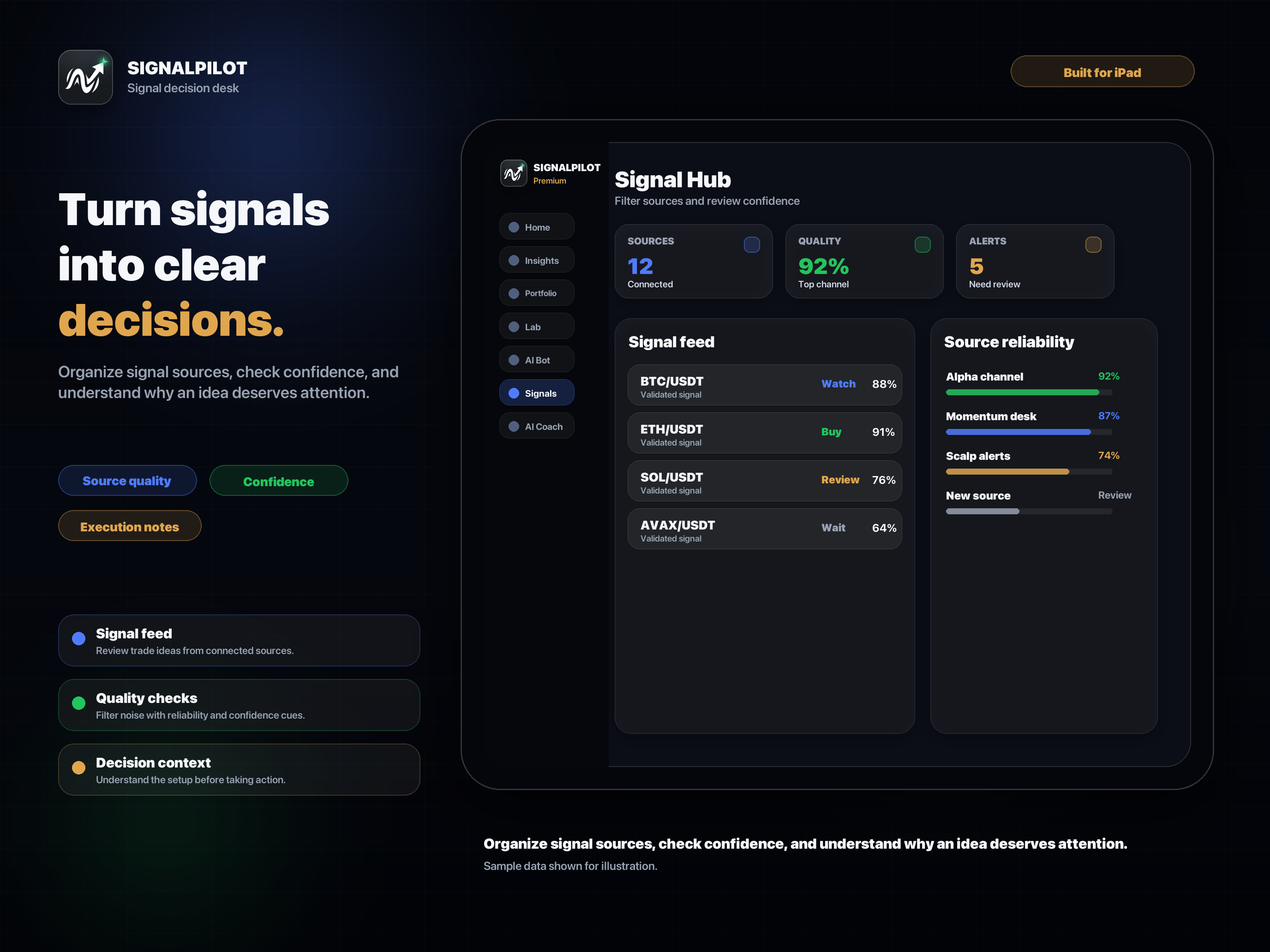
SignalPilot is designed around that sequence. The web app brings the iPad signal hub into a larger workspace where parsing quality, source reliability, and active positions can sit beside the raw signal instead of living in separate tabs.
Quality scores should be explainable
A signal quality score is useful only when the trader can inspect why it changed. The strongest workflow shows raw message text, parser confidence, channel outcomes, historical targets, and compatibility with the user profile.
That is why the web workspace includes drill-down actions for raw signal data, quality explanation, timeline, versions, and outcomes. The score becomes a review surface, not a magic number.
AI should support judgment, not replace it
AI coaching is most valuable when it is tied to the exact trade context. A good assistant can flag overexposure, ask whether the stop-loss distance is realistic, and compare the setup against recent mistakes.
The safest architecture keeps execution explicit. SignalPilot separates analysis, simulation, and command actions so the user can approve, hold, or adjust instead of handing the wheel to an opaque automation.